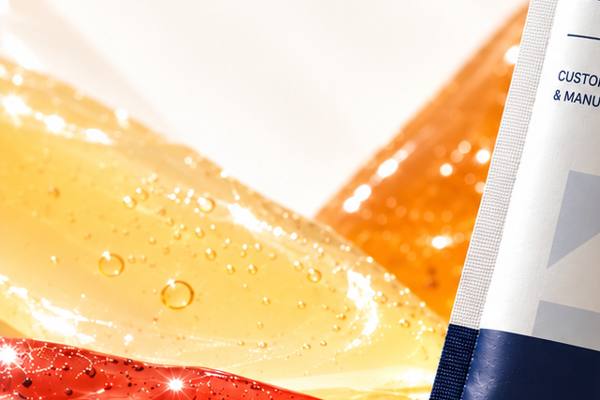
Ask a 65-year-old how they take their supplements and you'll likely hear "a tablet with breakfast." Ask a 25-year-old and the answer is more likely a gummy, a protein shake or something they found on TikTok.
That gap matters to anyone planning a supplement launch. Gen Z and Millennials make up 36% of US adults but account for 41% of annual US wellness spending, according to McKinsey. They're also the shoppers most willing to try a new format.
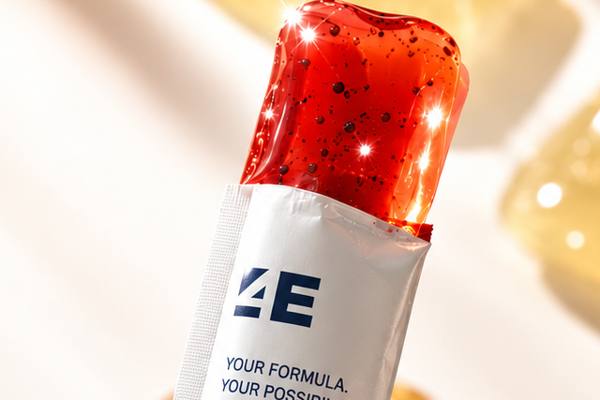
The gummy proved that format can drive a category. We think the jelly stick is next. Here's what the data says about younger supplement buyers, and why a single-serve jelly fits what they're looking for.
How younger consumers buy supplements
They're already taking them, often in new ways. In a July 2026 Pew Research Center survey of 3,554 US adults, 67% of 18–29-year-olds said they take at least one supplement. Their mix looks different from their parents'. Only 48% take vitamins or minerals, compared with 81% of adults 65 and older. Meanwhile, 37% take protein supplements, compared with 23% of seniors.
Many are new to the category. More than one in three US supplement users started within the past two years (Nutrition Business Journal, 2023). New users haven't formed a pill habit yet, so they're open to whatever format serves them best.
They choose formats that feel like food. Gummies are now the top-selling supplement format in the US, growing at a 17% compound annual rate since 2019 (Nielsen, via Glanbia Nutritionals). Gummies reached $18.25 billion in 2025, 24.6% of US sales by delivery format (Nutrition Business Journal). Younger buyers lead that shift: 43.4% of Gen Z and 30.9% of Millennials say they favor gummies, compared with 18.9% of Boomers (Nutrition Business Journal, 2022).
Taste comes first. Among gummy users, 52% name taste as the top quality they look for, ahead of affordability at 37% and high-quality ingredients at 25% (Glanbia Health & Wellness Consumer Study, 2023).
They discover products on social media and buy them there. Supplements are now the largest category on TikTok Shop, at 13% of its sales. TikTok Shop supplement sales grew 71.1% in the year to January 2026, while the total supplement market grew 12.4% (NielsenIQ, 2026). Gen Z is 2.1 times more likely than average to name social media as their most trusted media source.
Their reasons are different too. Stress and mood are the top two reasons Gen Z and Millennials take supplements. Weight is the main driver for Gen X and Boomers (Nutrition Business Journal, 2022).
Format preference flips with age
Tablets are Boomers' top pick and Gen Z's least favorite. The younger the buyer, the more the format itself decides the sale.
Why the jelly stick fits what they want
Younger buyers have told the market what they want from a supplement: it should taste good, fit into a busy day and feel more like a snack than a medicine. The gummy delivered the first two. The jelly stick builds on them.
- It's a treat, not a chore. Like a gummy, a jelly stick is something people look forward to. Flavor, sweetness and texture can all be tuned for the audience.
- It's built for on the go. Each serving is sealed in a slim stick that fits a pocket or gym bag. There's no bottle, no water and no measuring.
- It fits protein-first and fitness lifestyles. More than half of Gen Z and Millennial shoppers say they follow a high-protein diet (SPINS, 2025). A jelly serving is many times the mass of a gummy, so it gives formulators more room for actives than a single gummy.
- It's made for the feed. A colorful stick you tear open and squeeze is easy to film and share. That matters when supplements are TikTok Shop's biggest category.
- It's already a hit in Asia. Jelly sticks are everyday products in Korea and Japan. One major Korean manufacturer, Cosmax, reported jelly-format sales up 51% year over year in the first quarter of 2026. Korean "cutting jelly" sticks also went viral in the US in early 2026 after celebrity posts on TikTok.
In the UK, one in three supplement users aged 16 to 24 say they want a wider variety of formats (Mintel, 2021). US brands that give younger buyers something new have a chance to win them early, before habits set.
What brands should know before they build one
A new format is an opportunity, not a guarantee. Plan for these questions early:
- Texture is new to many Americans. Jelly is familiar in Seoul and Tokyo but less so in most US homes. Test your flavor and firmness with your target buyers before you scale.
- Some actives need extra work. Jelly is made with heat, so heat-sensitive ingredients may need overage or a more stable grade.
- Dose has a ceiling. The jelly base has to hold its texture, which limits how much active fits in one serving.
- Claims still need evidence. Social media can make a product popular fast. Any health claim on the pack still has to be supported.
Build your jelly stick with a US partner
4Excelsior is building a jelly stick line in the USA. We believe it will be the first jelly stick line operated by a US contract manufacturer on US soil. We'll announce the production start date soon, and we're taking formulation conversations now.
Tell us who your customer is and what you want them to feel. We'll tell you honestly what a jelly stick can deliver.
Sources
- Pew Research Center, About 8 in 10 Americans take supplements, 10 Sep 2026 (survey 6–12 Jul 2026, n=3,554)
- McKinsey Future of Wellness, as reported by Storyboard18, 4 Jun 2025
- Glanbia Nutritionals, Beyond Pills: Innovation in Supplement Delivery Formats, 12 Aug 2024 (citing NBJ 2023, Nielsen xAOC 2023, Glanbia U&A 2023)
- Glanbia Nutritionals, Global Supplement Update (citing NBJ 2022, Mintel 2021)
- NielsenIQ, State of Supplements: Social Commerce, Mar 2026
- Fortune, Proteinmaxxing shows a meaningful shift, 29 Sep 2026 (SPINS figure)
- Edaily, Cosmax jelly sales Q1 2026, 15 Jun 2026
- Noom, What Is Cutting Jelly?, 18 Feb 2026
- Nutrition Business Journal, 2025 gummy sales figures