Why “No Pork” Doesn’t Mean Your Supplement Is Ready for IFANCA Halal Certification
One of the easiest ways to underestimate a halal project is to look at the formula and say:
"There's no pork and no alcohol. We should be fine."
Sometimes you are. Sometimes that sentence is the beginning of several weeks of emails.
For brands working on halal dietary supplements for the first time, the formula can look completely straightforward. The product may be vegetarian. There may be no obvious animal ingredients at all. Every raw material may already be approved under the manufacturer's normal GMP supplier qualification program.
Then halal review starts. Suddenly we're asking where the glycerin came from. Whether an enzyme is microbial or animal-derived. What the capsule shell is made from. What's actually inside a flavor system. Whether a vitamin premix contains a carrier that wasn't obvious from the specification. And whether the documentation we have actually proves any of it.
That's when the project changes. Halal certification isn't simply about removing pork from a formula. It's about being able to demonstrate that the ingredients, manufacturing process, and controls behind the product are consistent with halal requirements.
At 4Excelsior, we work with IFANCA—the Islamic Food and Nutrition Council of America—for our halal certification program. And if there's one thing we've learned from halal projects, it's this:
The ingredients that look harmless are often the ones that generate the most questions.
"No Pork" Is the Starting Point, Not the Finish Line
Most people understand the obvious halal restrictions. Pork is prohibited. Alcohol creates concerns. Certain animal-derived materials require additional review.
But modern dietary supplements aren't usually made from five simple ingredients with obvious origins. A formula might contain twenty, thirty, or more raw materials. Some of those materials are themselves blends. A flavor may contain multiple components. A vitamin premix may contain carriers or processing aids. An enzyme can come from microbial, plant, or animal sources. Glycerin can be plant-derived or animal-derived. Gelatin and collagen immediately raise questions about animal source and processing. Even ingredients that sound completely ordinary can require another layer of investigation.
IFANCA specifically identifies categories such as amino acids, animal fats and proteins, emulsifiers, enzymes, flavors, gelatin, glycerin, hydrolyzed proteins, vitamins, whey proteins, stabilizers, thickeners, oils, coatings, and certain packaging or processing components as areas manufacturers may need to examine more carefully.
That's why looking at the ingredient statement alone isn't enough. The ingredient name tells us what the material is called. It doesn't always tell us where it came from.
The Ingredient You Weren't Worried About May Be the One Holding Up Approval
This is where halal projects become very different from a normal formulation review. Under a standard quality review, we may already have a specification, COA, allergen statement, country-of-origin information, and other supplier qualification documents. From a GMP standpoint, everything may be perfectly acceptable.
Halal asks another question:
Can we establish the source?
And sometimes the documents we already have don't answer it. That's when the email chain begins. We ask the supplier. The supplier asks the manufacturer. The manufacturer sends another statement. The statement answers half the question. Then another document is requested. Meanwhile, the formula hasn't changed at all.
We've learned not to underestimate these situations, especially with complex ingredients. If an ingredient has several possible sources, it's much better to identify that question before production is scheduled than after everyone assumes the formula is ready.
A $5 ingredient can hold up a much larger production run if the documentation behind it isn't clear. The cost of the ingredient has nothing to do with the risk it creates for certification.
A Halal-Certified Facility Does Not Automatically Make Every Product Halal
This distinction is extremely important. A manufacturing facility can operate under a halal certification program without every product manufactured at that location automatically becoming halal certified.
IFANCA's own guidance distinguishes site certification from individual product certification: a certified manufacturing location has been evaluated for its ability to produce halal products, but that does not automatically certify every item produced there.
For brands, this matters. Working with a halal-certified contract manufacturer gives you an important foundation. It means the facility already understands the controls, documentation, segregation, and manufacturing practices expected under the program.
But your product still has to qualify. Your ingredients still matter. Your suppliers still matter. Your formula still matters. Your documentation still matters. And the final product needs to be included appropriately within the certification program before you start treating "manufactured at a halal-certified facility" and "halal-certified product" as the same claim. They're not.
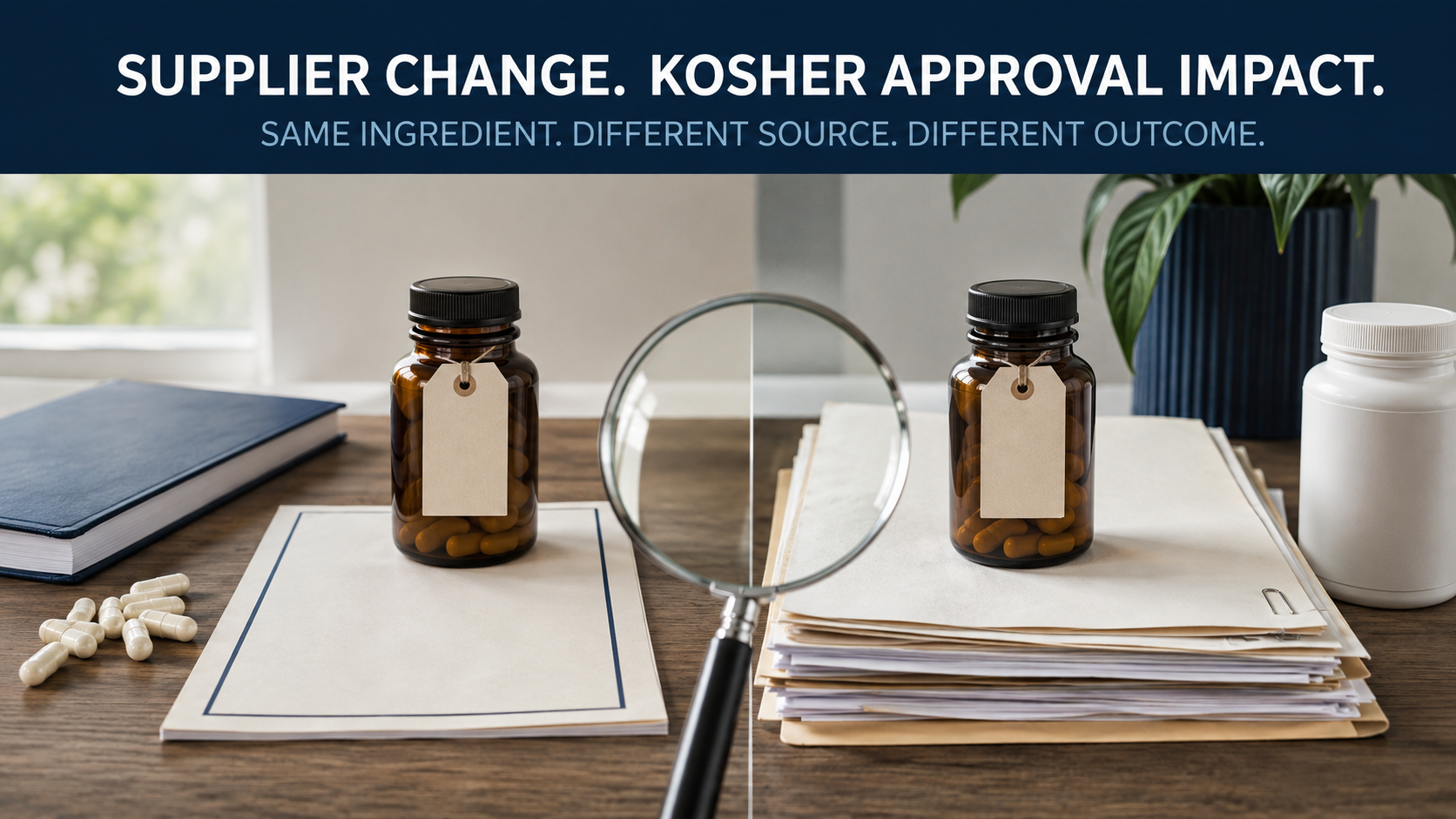
Changing a Supplier Can Change More Than Your Purchase Order
This is one of the areas brands don't always think about when they first launch a certified product. In conventional manufacturing, changing a raw material supplier may already require qualification, specification review, testing, and change control.
For a halal-certified product, there may be another question:
Does the new source still support the halal status of the product?
Same ingredient name doesn't always mean same source. Two glycerin suppliers may produce chemically equivalent material from different feedstocks. Two capsule suppliers may provide products that perform identically but have different raw material origins. Two flavors with the same profile may have very different component structures.
From Purchasing's perspective, the replacement may look equivalent. From Production's perspective, it may run exactly the same. From the halal certification perspective, it may need to be reviewed before anyone assumes the change is acceptable.
This is why certified products need change control that goes beyond "Does it meet our specification?" Sometimes the more important question is:
Does this change affect the certification we already promised the customer?
Shared Equipment Is Where the Facility Has to Prove Its System
Dietary supplement contract manufacturers rarely make one type of product all day. The same facility may manufacture conventional, organic, vegan, kosher, halal, and sports-certified products for different customers. That makes segregation and cleaning important.
IFANCA notes that halal production requires precautions against cross-contamination with non-halal substances and expects equipment used for halal production to be appropriately cleaned and protected from contamination.
On paper, that sounds simple. On the production floor, it means the system has to work. Materials need to be identified correctly. Operators need to know what they're handling. Production sequencing may matter. Cleaning records matter. Warehousing matters. And when something unusual happens, the documentation needs to tell the same story as the floor.
This is one reason we don't view halal as a logo project. It's an operational project. The logo comes later.
The Worst Time to Ask About Halal Is After the Label Is Printed
We've seen this pattern with almost every certification program. The brand develops the formula. The artwork gets designed. Marketing adds the certification claim. Packaging gets close to final approval. Then someone asks:
"By the way, are we approved for this?"
That's backwards. For an IFANCA Halal project, certification questions should be raised while the formula and ingredient sources can still be changed without creating a crisis. Because once packaging has been printed, every unresolved question becomes expensive.
Maybe one ingredient needs additional documentation. Maybe a supplier needs to provide evidence that takes time to obtain. Maybe an ingredient source needs to change. None of those problems are particularly dramatic when discovered early. They're very dramatic when 50,000 labels already say Halal.
IFANCA also advises consumers to verify halal-certified products through its certified product listings or the applicable certification mark rather than assuming every product from a company is certified. Certification status should drive the claim. The artwork shouldn't drive the certification.
Why Brands Are Looking at Halal Beyond Traditional Export Markets
Halal certification used to be discussed with us primarily as an export requirement. That's changing. IFANCA has noted that halal certification is increasingly relevant for products sold domestically in addition to products exported to Muslim-majority markets.
That makes sense. The U.S. market is more diverse, mainstream retailers carry more halal-certified products, and brands are paying closer attention to consumers who actively look for recognized halal certification. For a supplement brand, that can turn halal from a niche request into a market-access decision.
Export opportunities are still important. But the conversation isn't only about export anymore. A recognized certification can also help a brand communicate something very simple to consumers:
You don't have to take our word for it. Someone independent reviewed it.
That's particularly important with supplements because consumers can't look at a capsule or scoop of powder and determine where every ingredient originated. Trust has to come from somewhere.
Why We Work With IFANCA
There are multiple halal certification organizations in the market. At 4Excelsior, our halal certification program is through IFANCA. For us, the value isn't simply having a halal certificate available when a customer asks for one. It's having an established framework for answering the questions that inevitably come with halal manufacturing.
Is this ingredient acceptable? What documentation is needed? Does this supplier change require review? Can this product be added to the program? What needs to happen before the customer puts a halal mark on the artwork?
Those questions are much easier to handle inside an established certification system than when a brand tries to figure them out after the product has already been developed.
And, like most certification programs, the value becomes most obvious when something changes. Certification is relatively easy when nothing changes. Manufacturing rarely gives you that luxury.
The Halal Logo Is the Last Step, Not the First
Brands understandably focus on what consumers see. The certification mark. The label claim. The finished bottle on the shelf.
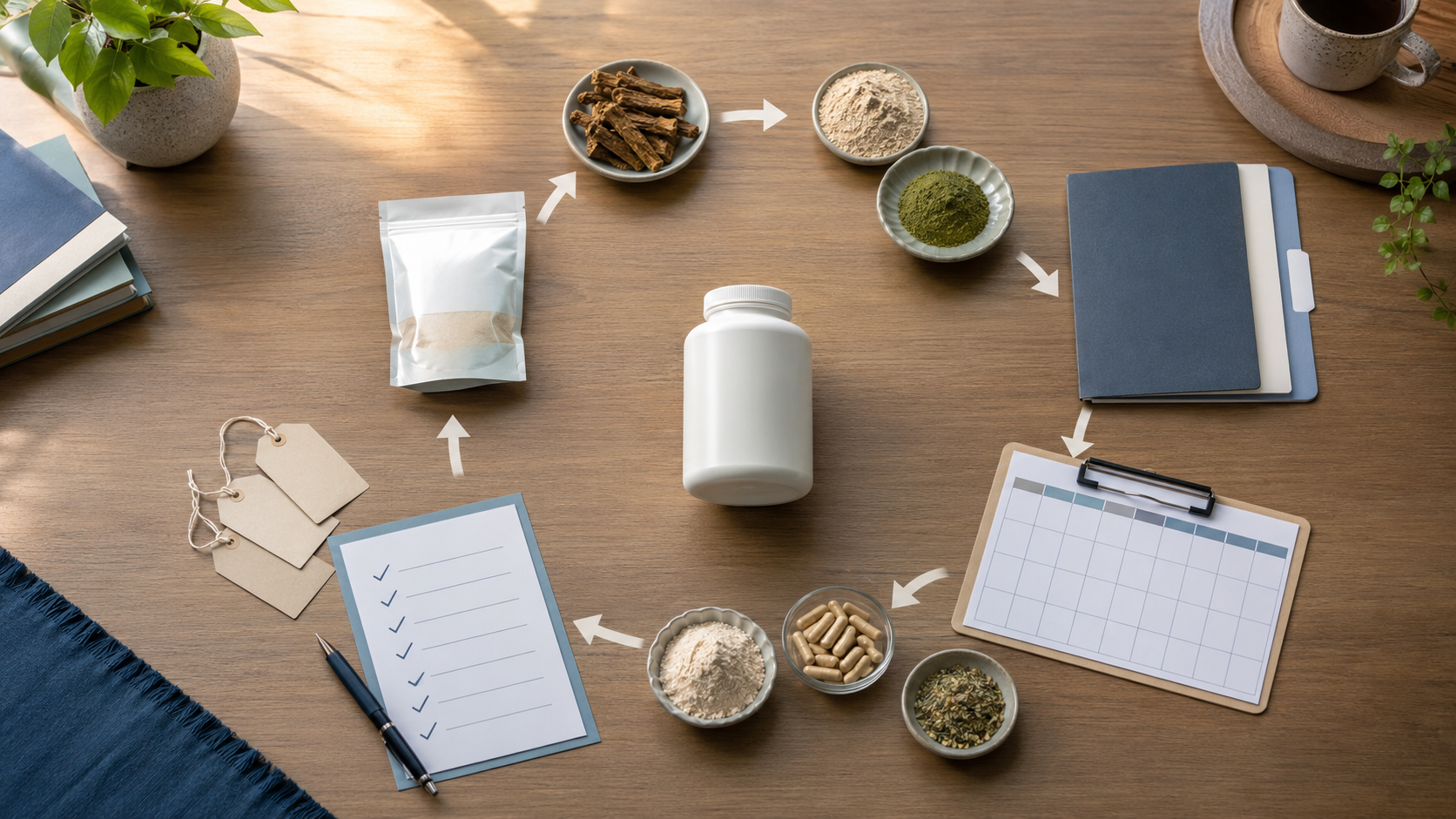
Manufacturers see everything that happened before that bottle existed. Supplier documents. Ingredient reviews. Material receiving. Warehouse controls. Cleaning. Production records. Change control. Label approval. Those are the parts consumers will never see. They're also the parts that make the claim possible.
That's why we prefer discussing halal requirements early in product development. If an ingredient creates a problem, we still have options. If a supplier needs documentation, we still have time. If the formulation needs adjustment, we're not throwing away printed packaging.
Halal certification is much easier to build into a product than to bolt onto one that's already finished.
Preparing a Product for IFANCA Halal Certification?
If halal certification is part of your retail, export, or brand strategy, bring it into the conversation before production begins. The earlier we review the formulation, ingredient sources, supplier documentation, manufacturing requirements, and label plans, the fewer surprises tend to appear later.
Contact the 4Excelsior QA & Compliance Team to discuss your IFANCA Halal project and request our Halal Certification Readiness Checklist.
The best time to discover that an ingredient needs more documentation is while you're still reviewing the formula. Not while production is waiting.
Conclusion
Halal certification looks simple from the outside. No pork. No prohibited alcohol. Use acceptable ingredients. Put the logo on the package.
Anyone who's actually worked through the process knows there's much more sitting underneath that logo. The difficult questions usually aren't about the ingredients everyone already knows to worry about. They're about the ones nobody thought to question.
Where did this glycerin come from? What's the source of this enzyme? What's inside this flavor? Did this supplier change? Can we prove it?
That's why we don't treat halal certification as a final label decision. We treat it as part of product development and manufacturing from the beginning. Because by the time the Crescent-M appears on the package, the important work should already be done.
About 4Excelsior
4Excelsior is a California-based dietary supplement contract manufacturer specializing in powder, capsule, and tablet manufacturing. Our facility maintains a halal certification program through IFANCA and supports brands developing halal-certified dietary supplements for domestic and international markets.
Planning an IFANCA Halal product? Contact 4Excelsior early in development so our QA & Compliance Team can review the certification pathway before formulation, sourcing, and packaging decisions become expensive to change.