If your brand wants a jelly stick today, the usual route runs through a manufacturer in Asia: ocean freight, import duties, long lead times and orders sized to fill a container.
We're building a different route. 4Excelsior is adding a dedicated jelly stick line to our manufacturing operations in Anaheim, California, so US brands can develop and produce this format domestically. We believe it will be the first jelly stick line operated by a US contract manufacturer on US soil.
We'll announce the production start date soon. Formulation conversations start now.
What is a jelly stick?
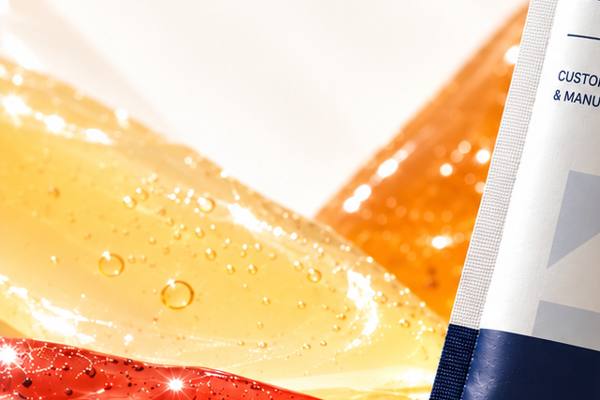
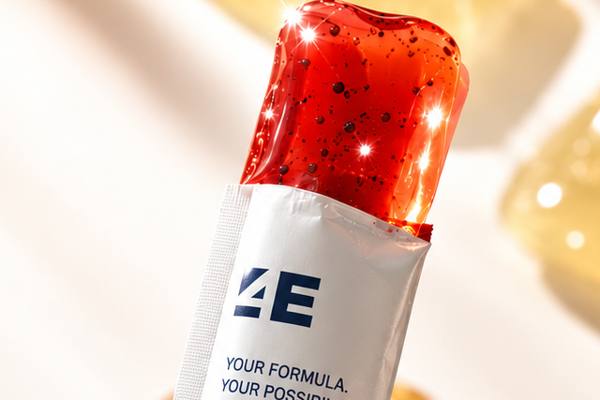
A jelly stick is a single serving of soft functional jelly sealed in a slim stick pack. You tear the notch and eat it straight from the pack. No water, no measuring, no pills to swallow.
The format is already familiar in Korea and Japan, and jelly sticks have started to appear on some US shelves. What's been missing is a way to make them here.
For brands, the appeal is practical:
- One sealed serving per stick. Each dose is packed on its own, so there's no bottle opened day after day.
- More room for actives than a gummy. A typical gummy weighs 1–3 g in total, base and sugar included. A jelly stick serving is many times that mass, which gives formulators more space to work.
- Easy to carry and take. A stick fits a pocket, gym bag or desk drawer and needs no preparation.
Why brands are looking beyond pills and gummies
American consumers have already moved past the pill bottle. Non-pill formats make up about 65% of the US supplement market, and gummies alone reached $18.25 billion in 2025, 24.6% of sales by delivery format (Nutrition Business Journal).
The reasons are personal. In a Harris Interactive survey, 40% of US adults said they had experienced difficulty swallowing pills, and 8% had skipped a dose because of it.
Gummies answered that demand, but the format has limits. A gummy is small, so a large dose of an active can fill most of a piece on its own. Sugar is part of the gel's structure, not just its taste.
A jelly stick keeps what people like about gummies (it's a treat, not a chore) and gives a brand a larger serving to formulate in.
Why domestic jelly stick manufacturing matters
Until now, US brands looking for jelly sticks have largely turned to manufacturers in Asia. That works, but it puts an ocean between the brand and its product. Producing here changes the math:
- No ocean freight. Product moves by truck, not container ship.
- No import duties on finished goods. Tariff changes on imported supplements don't touch your landed cost.
- Shorter lead times. No waiting months for production plus transit and customs.
- A line you can visit. Your team can see the line, attend a run and talk to the people making your product.
The jelly stick line joins the capsule, tablet and stick pack capabilities we already run, so a brand can keep several formats with one partner.
What to know before you start
A jelly stick is a new format, so good projects start with a few honest questions:
- Is your active a good fit? Jelly is made with heat, and some ingredients lose potency at high temperatures. We test each formula and plan overage, or recommend a heat-stable grade, case by case.
- How much can one serving carry? The jelly base has to hold its texture, which limits how much active fits in one stick. We'll tell you early whether your target dose works.
- Will your customers like the texture? Jelly is everyday in Seoul and Tokyo but newer to many American shoppers. Flavor, sweetness and firmness can all be tuned.
- How long will it last? Shelf life depends on the finished formula, so we set it from stability testing on your product, not from a generic number.
We can't publish a production start date yet. We can start on your formula now, so you're ready when the line is.
Start your jelly stick project
Tell us about your product idea: the active, the target dose, the customer. We'll come back with an honest view of what's possible in a jelly stick.