NSF Certified Supplement Manufacturing: A Brand Owner’s Guide (2026)
NSF certification is one of those topics that tends to come up later than it should.
Most brands don't start a project thinking about it. Instead, it usually comes up when a retailer, distributor, or partner asks whether a product is NSF certified—or whether it can be. At that point, the conversation shifts pretty quickly from "what is NSF?" to "can we actually support this with our current setup?"
From what we've seen, the confusion is rarely about the definition. It's more about where certification actually sits in the process. Many people focus on the finished product, but a large part of the requirement is tied to how that product is manufactured.
So instead of going through a general explanation, this article focuses on what matters in practice—what it means to work with an NSF-certified facility, how that impacts your flexibility as a brand, and where projects tend to slow down if this isn't considered early.

What does NSF certification mean for a manufacturer?
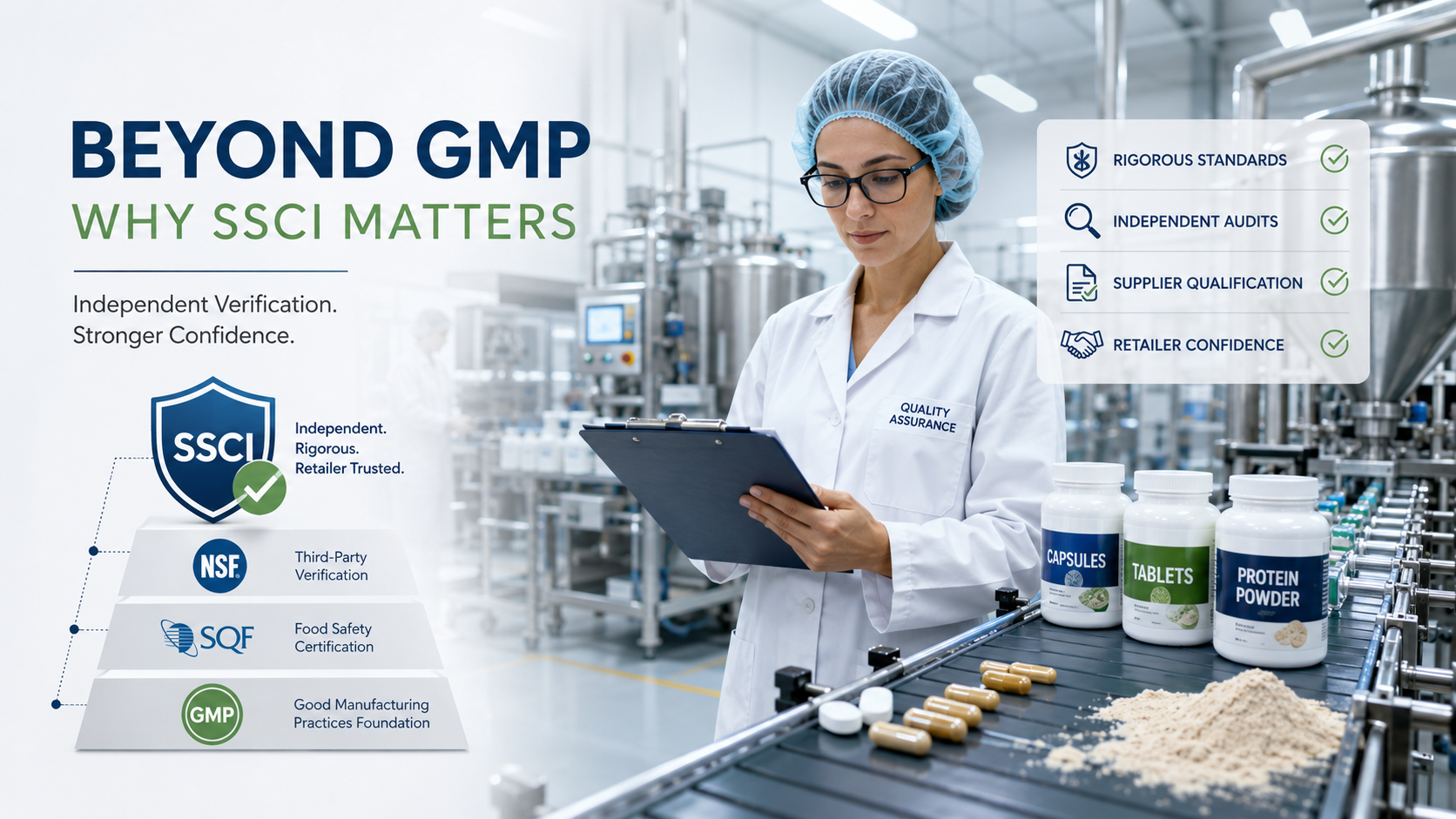
When a manufacturer is described as NSF certified, it means the facility itself has been evaluated by NSF against a defined set of standards.
That goes beyond basic regulatory compliance. Most supplement manufacturers already operate under 21 CFR Part 111, but NSF looks more closely at how those requirements are actually implemented in day-to-day operations. It's less about whether procedures exist, and more about whether they are consistently followed and supported by real records.
During an audit, NSF is not just reviewing SOPs. They are looking at how materials move through the facility, how batches are tracked, how deviations are handled, and whether documentation aligns with what is happening on the production floor.
There are also different levels. A facility may be NSF certified under general dietary supplement standards, or it may be capable of supporting NSF Certified for Sport®. The latter introduces additional expectations, particularly around controlling the risk of banned substances.
That distinction becomes important once the intended market is clear.
Why this matters for your brand (even if certification isn't immediate)
Even if NSF certification is not part of your initial plan, the manufacturing setup still plays a role.
We've seen situations where a brand launches a product and then later decides to pursue NSF certification because of a new opportunity. At that point, the question becomes whether the existing formulation, suppliers, and manufacturing process can support it without major changes.
If the product was not developed with NSF in mind, adjustments may be required. Sometimes it's documentation. Sometimes it's supplier-related. In other cases, it can involve reformulation or changes to how the product is produced.
Starting in an NSF-certified facility doesn't eliminate all of these variables, but it usually reduces the gap. The baseline expectations are already closer to what will be required later, which tends to make the transition smoother.
It also affects how external partners evaluate the product. In some cases, the manufacturing environment itself becomes part of the discussion, especially when dealing with more regulated channels.
NSF Certified vs NSF Certified for Sport® (what actually changes)
The difference between standard NSF certification and NSF Certified for Sport® is often underestimated at the beginning.
General NSF certification focuses on GMP alignment and product consistency. It verifies that processes are controlled and that products match their label claims.
NSF Certified for Sport®, however, introduces an additional layer of control. The primary concern becomes preventing any contamination with substances that are banned in athletic testing programs.
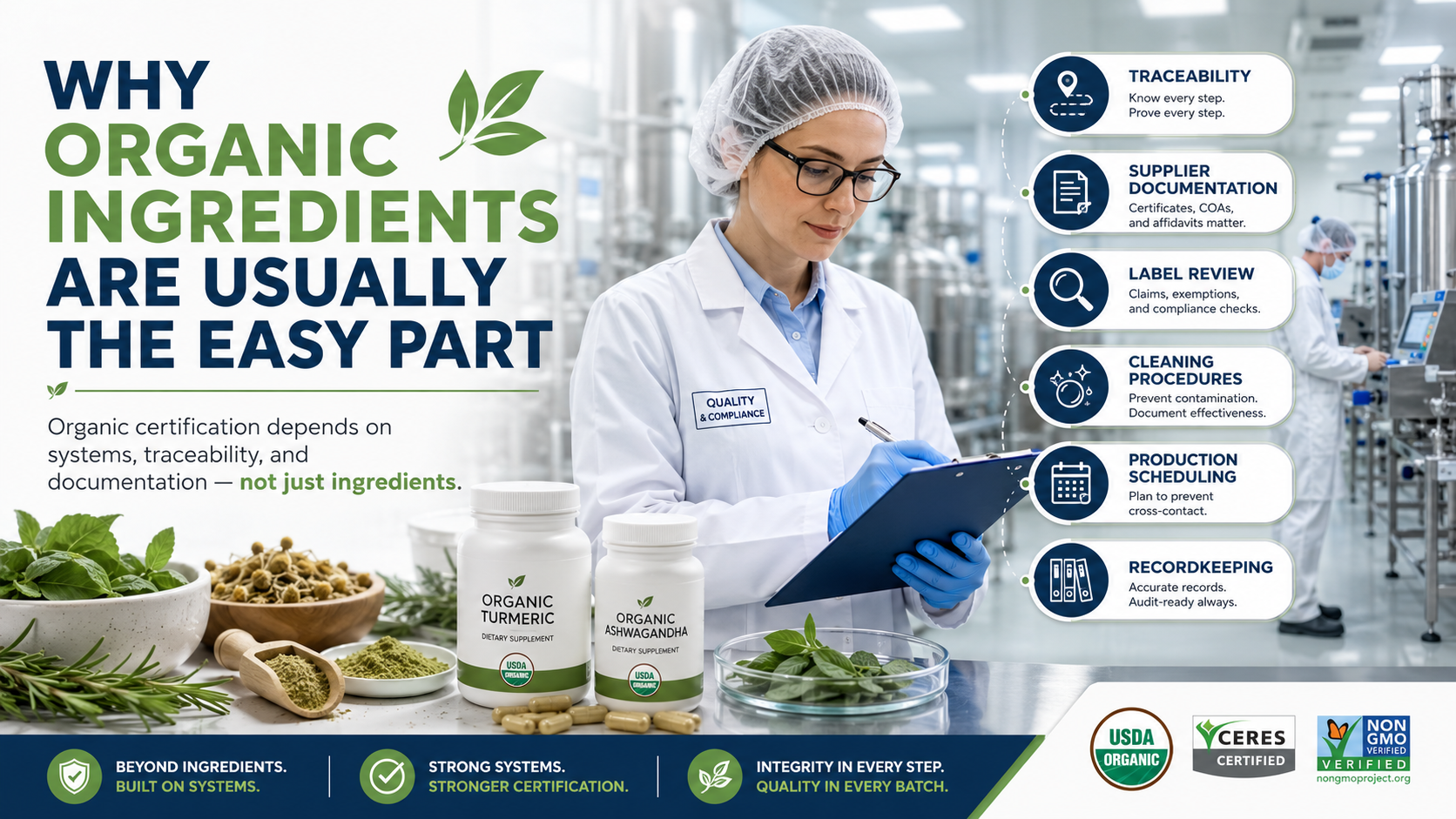
In practice, this affects multiple areas. Raw material sourcing may require more verification. Cleaning procedures may need additional validation. Production scheduling may need to be structured in a way that minimizes cross-contact risk.
Because of this, not every NSF-certified facility is automatically suitable for Sport certification. If a brand is targeting that market, it's something that needs to be confirmed early rather than assumed.
What changes when you work with an NSF-certified facility
From a high-level view, the workflow doesn't look dramatically different. You still have formulation, batch records, and production timelines.
But internally, there are differences that tend to show up fairly quickly. Documentation is usually more detailed. Ingredient reviews are more thorough, even for components that might otherwise be considered routine.
There is also less flexibility around late-stage changes. Something that might be adjusted quickly in a standard setup can require additional review in an NSF-aligned system.
Another difference is how deviations are handled. Even smaller issues are expected to be documented and investigated in a consistent way. This can add time in the short term, but it usually reduces risk later—especially if the product is reviewed by a third party.
Overall, the process tends to shift effort toward the beginning. More work happens upfront, which helps avoid surprises once production is underway.
What working in an NSF environment looks like day-to-day
One thing that doesn't always come through in certification descriptions is what the environment actually feels like on a daily basis.
From an operational standpoint, the difference is not just in documentation, but in how consistently those documents are used. There is usually less reliance on "tribal knowledge," and more emphasis on making sure processes are clearly defined and repeatable.
For example, material handling tends to be more structured. It's not just about receiving and storing ingredients, but also about how they are tracked, labeled, and verified before use. Small gaps in this process can become larger issues later, especially if traceability is questioned.
Another area is line clearance and changeover. In an NSF-aligned environment, these steps are typically more formalized. There is less room for assumption, and more expectation that each step is documented and verifiable.
This doesn't necessarily slow things down long term, but it does require a different level of discipline compared to more flexible setups.
Where brands usually run into problems
Most delays are not caused by the certification requirements themselves, but by how projects are planned.
A common issue is treating NSF as something that can be added at the end. By that point, the formulation is already finalized, suppliers are locked in, and timelines are tight. If anything doesn't align, changes become more difficult.
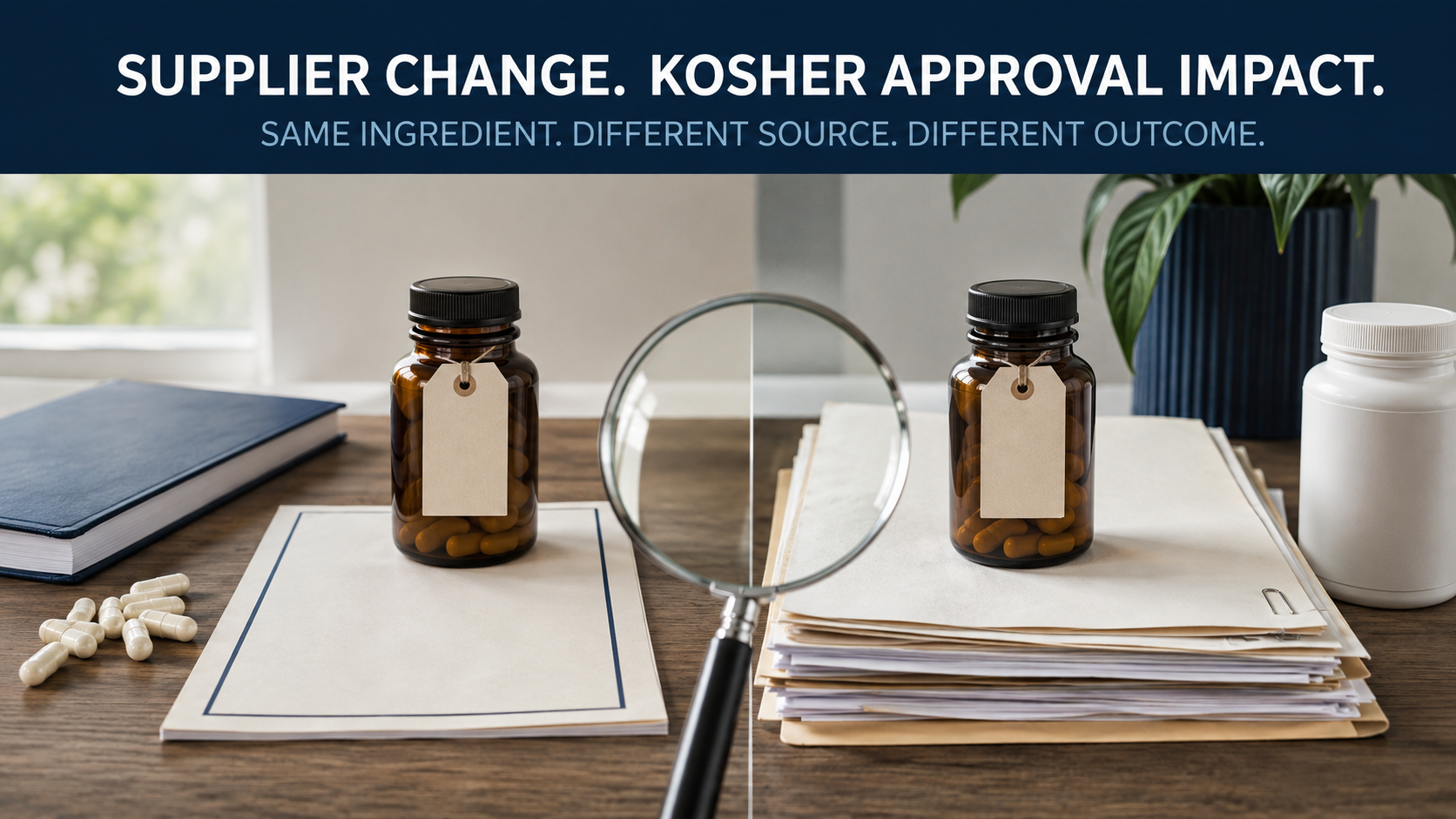
Supplier documentation is another area that comes up frequently. Even when ingredients are acceptable, missing or inconsistent records can slow things down.
We also see situations where only active ingredients are reviewed closely, while excipients or capsule materials are treated as secondary. In reality, all components go through review, and these smaller details can create delays if they are overlooked.
Finally, timelines are often underestimated. First-time NSF projects almost always involve additional steps that were not initially planned.
How to decide if NSF certification is worth it for your product
Not every product needs NSF certification, and in some cases, it may not make sense from a cost or timeline perspective.
One way to look at it is based on where the product is going. If the target market includes professional athletes, certain retailers, or regulated programs, NSF Certified for Sport® may be necessary. In those cases, planning for it early is usually the better option.
If the product is positioned for general consumer use, NSF certification may still provide value, but it becomes more of a strategic decision rather than a requirement.
Another factor is timing. If the goal is to launch quickly, adding NSF certification late in the process can create delays. On the other hand, if certification is built into the initial plan, it is easier to manage expectations.
In practice, this is usually a trade-off between speed, cost, and long-term flexibility.
Additional timing and planning considerations
Timing tends to be where most expectations don't match reality.
Even when everything is aligned, NSF-related projects typically take several months from start to finish. That includes documentation review, audit scheduling, and product testing.
Where delays often happen is in the preparation phase. Missing documentation, unclear specifications, or supplier-related questions can create back-and-forth that extends timelines.
Another factor is internal alignment. If different teams are working with slightly different assumptions, it can slow down decision-making during the review process.
This is why early feasibility discussions tend to make a difference. A short review at the beginning can often identify potential issues before they become timeline risks.
How NSF considerations can affect formulation decisions
Formulation is another area where NSF considerations can have an impact, even if it's not obvious at first.
In some cases, ingredients that are acceptable in a general supplement context may require additional review under NSF or NSF Certified for Sport® programs. This doesn't always mean they are disallowed, but it can mean more documentation or justification is needed.
We've also seen situations where supplier selection becomes part of the discussion. Two suppliers may offer similar materials, but differences in documentation or traceability can influence which one is more suitable for an NSF-aligned project.
Another factor is how excipients are treated. These are sometimes finalized later in development, but in an NSF context, it's usually better to review them early to avoid delays.
None of these are necessarily major obstacles, but they do affect how smoothly a project moves forward if certification becomes part of the plan.
How 4Excelsior approaches NSF and NSF Sport projects
From our perspective, timing is usually the biggest factor.
When NSF is considered early, the process tends to be more predictable. We can review the formulation, check supplier documentation, and identify anything that may need adjustment before production is scheduled.
Most of the work happens behind the scenes—aligning documentation, confirming specifications, and making sure internal processes match what will be expected during an audit.
For NSF Certified for Sport® projects, there is typically more coordination required. Controls around segregation and cleaning need to be clearly defined, and production planning may need to be adjusted accordingly.
Frequently Asked Questions
If my product is made in an NSF-certified facility, is it automatically NSF certified?
No. Facility certification and product certification are separate. However, starting in the right environment can make future certification easier.
Do I need an NSF-certified manufacturer for NSF Certified for Sport®?
In most cases, yes. The additional controls required for Sport certification are not supported by all facilities.
Does this increase cost?
It can, depending on the level of control required. This is usually evaluated alongside market requirements.
Can I switch to an NSF-certified facility later?
Yes, but it may require requalification and additional review.
When should I start considering NSF?
Earlier than most people expect. Planning ahead tends to reduce delays.
Conclusion
NSF certification at the manufacturing level does not automatically certify a product, but it creates a foundation that makes future steps easier.
For brands that may need NSF or NSF Certified for Sport®, the main advantage is starting with a setup that already aligns with those expectations. That usually means fewer changes and fewer delays later.
If there is any uncertainty around whether a product or process can support NSF requirements, it is generally easier to review that early rather than trying to adjust at the end.
👉 Contact 4Excelsior to discuss your project.
Author
Written by QA Team, 4Excelsior.